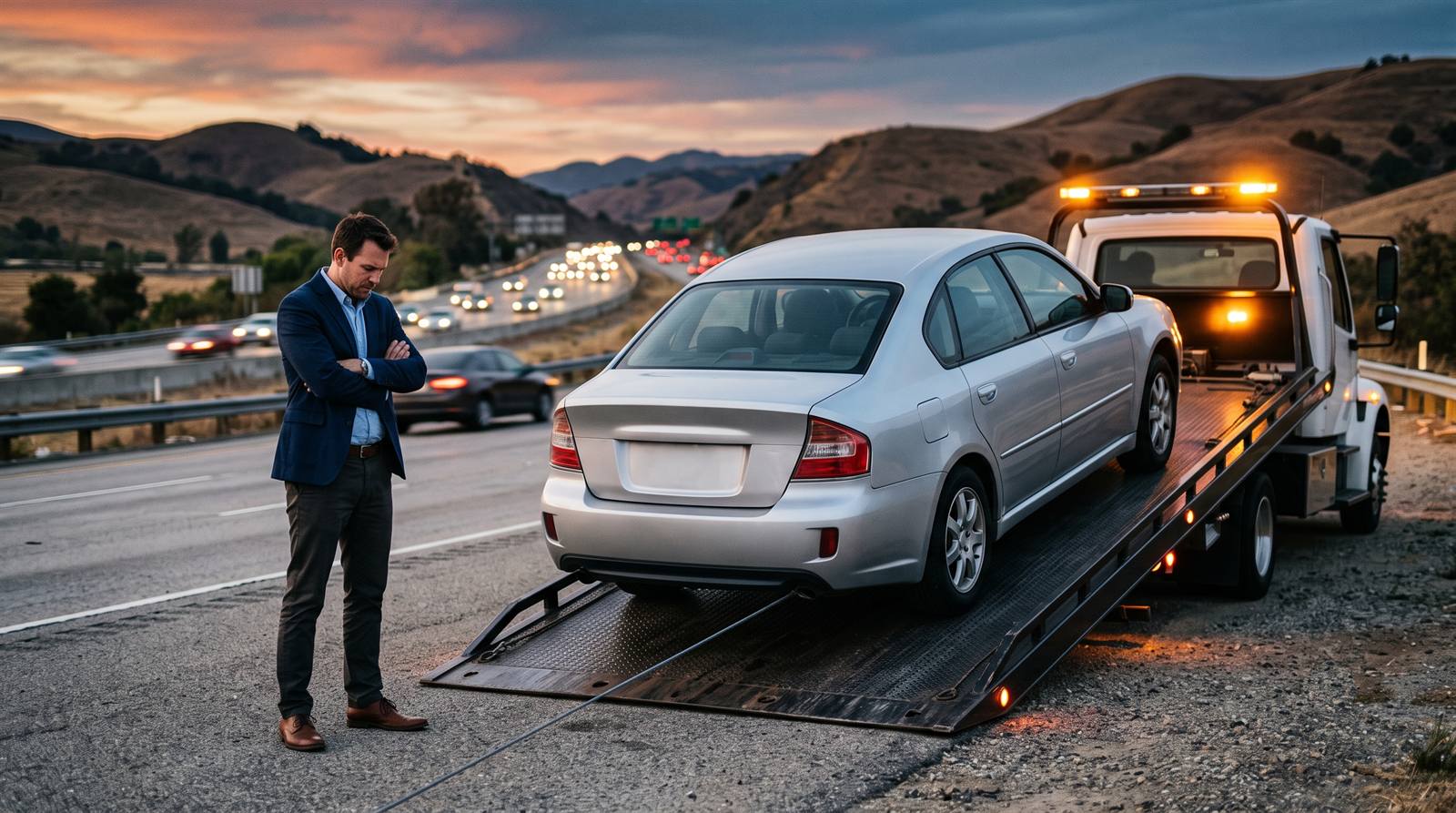
It usually starts with a sound. A metallic knock that gets louder with the RPMs, a warning light, and then one day the engine stalls in traffic or simply will not turn over. If you own a Hyundai or Kia, you are not imagining it, and you are far from alone. These engines have been recalled by the millions, and the companies paid one of the largest safety penalties in U.S. history over how they handled it.
By now you have probably also gotten a class-action settlement notice, or seen one online, and been told you are "covered." Here is the part that notice does not spell out: the settlement gives you an extended warranty and some reimbursement, not a buyback. For a car that keeps failing, those are very different things. This guide explains the defect in plain English, what the settlements actually do, and where a California lemon law claim can get you a great deal more. For the bigger picture, start with our overview of California lemon law.
The Defect Behind the Recalls
Most of the engine recalls trace back to one root problem: premature connecting rod bearing failure. During manufacturing, metal debris and machining inconsistencies left inside the engine restrict the flow of oil to the bearings. Starved of oil, the bearings overheat and wear out. First you hear a cyclic knocking noise. Then the engine can stall, often at speed. In the worst cases, a connecting rod snaps and punches through the engine block, spraying hot oil onto the exhaust and starting a non-crash engine fire.
This affected the Theta II 2.0L and 2.4L engines first, and later certain Nu and Gamma engines, across popular models like the Sonata, Santa Fe, Tucson, Elantra, Optima, Sorento, Sportage, Soul, and Forte. Rather than replace every engine up front, the automakers rolled out a software patch, the Knock Sensor Detection System (KSDS), that listens for the early vibration of a failing bearing and puts the car into a reduced-power "limp" mode to lower the fire risk. Useful, but it is a smoke detector, not a repair. The bad engine is still a bad engine.
- A separate "park outside" fire recall covers the anti-lock brake (ABS/HECU) module, which can short out and catch fire even while parked. That is an electrical defect, not the engine bearing problem — it had its own settlement.
- The "Kia Boys" theft issue (cars without an engine immobilizer that were easy to steal) is a completely unrelated matter with its own separate settlement. It has nothing to do with engine failure.
This Was Not a Minor Recall
It is worth understanding how seriously regulators treated this, because it tells you how strong the underlying facts are. In November 2020, the National Highway Traffic Safety Administration announced Consent Orders with both companies totaling $210 million in civil penalties ($140 million for Hyundai, $70 million for Kia), after finding they had recalled over 1.6 million Theta II vehicles too slowly and given the agency inaccurate information about the defects.
A year later, NHTSA paid a former Hyundai engineer a $24 million whistleblower award — its first ever — for showing that the companies failed to report the safety risk on time. In other words, this is not a gray-area "is it really defective" situation. The defect is well documented, and the manufacturers have already paid dearly for downplaying it. That history matters when you sit across from them in a lemon law dispute.
What the Class Settlements Actually Give You
Three big federal class-action settlements came out of this, all in the Central District of California:
- Engine I (Theta II GDI engines) — a lifetime warranty on the engine short block for covered cars.
- Engine II (Theta II MPI, Nu, and Gamma engines) — an extended 15-year / 150,000-mile powertrain warranty for covered cars.
- HECU/ABS (the "park outside" fire defect) — repairs and an extended warranty on the brake module.
All of them also reimburse documented past costs: prior repairs, towing, rental cars, and, if your car was destroyed by an engine fire, its value plus a small goodwill payment. If you own one of these cars, you should absolutely use those benefits — get the KSDS update, get the inspection, and keep every receipt. The warranty extensions are real, and they are generally conditioned on having the KSDS software installed.
But notice what is not on that list. Nowhere does the settlement make Hyundai or Kia buy your car back. Nowhere does it pay you a penalty. The class settlement keeps you in the car and promises to keep fixing it. For a lot of owners, that is exactly the problem.
An extended warranty says, "we will keep repairing it." A buyback says, "this car is a lemon, here is your money back." When an engine keeps failing, those are not the same deal — not even close.
A Warranty Extension Is Not a Buyback
Think about what a 15-year warranty actually does for someone whose engine has already failed twice. It sends them back to the same dealer for a third repair on the same defective design. You keep the car, keep the payments, keep the anxiety of wondering whether it will strand you again. That is fine if you trust the car. After two engine failures, most people do not.
California's lemon law was built for exactly this situation. The Song-Beverly Consumer Warranty Act says that if a manufacturer cannot fix a covered defect after a reasonable number of attempts, it has to take the car back. Not patch it again under an extended warranty — take it back, and pay you. That is the remedy the class settlement does not give you, and it is the reason an individual claim is often worth far more.
What a California Lemon Law Claim Can Do
Under California Civil Code section 1793.2(d), a qualifying buyback returns what you put into the car: your down payment, your monthly payments, the loan payoff, plus taxes, registration, and related fees. The main deduction is a usage offset based on the miles you drove before your first repair visit. For many owners that adds up to far more than a warranty extension is worth.
Two more provisions give California's law its teeth, and the class settlement has no equivalent to either:
- A civil penalty of up to two times your damages. Under section 1794(c), if the manufacturer's refusal to repurchase was "willful," a court can add a penalty of up to twice your actual damages. Given how much Hyundai and Kia already knew about these engines, that is a live issue in these cases.
- The manufacturer pays your attorney's fees. Under section 1794(d), a winning consumer recovers their attorney's fees and costs from the manufacturer. That is why a lemon law firm can take your case on contingency, and why it costs you nothing out of pocket.
Engine failed more than once? Find out what it's really worth.
A settlement notice tells you about a warranty. It does not tell you whether your car qualifies for a full buyback under California law. Send us your repair history and we will tell you straight. Free, no obligation, and no fees unless we win.
Start Your Free Case ReviewDo You Still Qualify? The Honest Answer
Here is where we will be straight with you, because the internet is full of advice that no longer fits. You may have read that the move is to "opt out" of the class settlement to protect your right to a buyback. For these particular Hyundai and Kia engine cases, that ship has largely sailed — the opt-out (exclusion) deadlines for the Engine I, Engine II, and HECU settlements have already passed. So this is not an article telling you to opt out. It is telling you why your situation needs a real review instead of a guess.
Whether you can still pursue an individual California claim depends on the specifics: your exact vehicle and model year, what warranty was in force when your failures happened, your class status, and how recent and repeated the problems are. A few things work in owners' favor:
- The class settlement releases cover economic-loss claims, but they do not release claims for personal injury or property damage. If an engine fire injured someone or burned property, such as a garage, those claims are separate and survive.
- A fresh pattern of failures under a warranty that is currently in force, including the extended warranty the settlement itself provided, can support a claim that the manufacturer still cannot conform the car to its warranty.
- Not every owner and not every vehicle was part of every settlement class. Coverage varied by engine, model, and year.
None of that can be sorted out from a blog post, and any honest lawyer will tell you the same. The point is simple: do not assume a settlement notice is the best you can do, and do not assume you have no options either. Get it checked.
What To Do Right Now
Whether your path is the settlement, an individual claim, or both, the steps that protect you are the same, and they all come down to paperwork.
- Save every repair order showing the date, the mileage in and out, and your complaint in your own words (knocking, stalling, warning light, loss of power)
- Keep your purchase or lease contract and any warranty documents, including the settlement notice you received
- Get the free KSDS update and engine inspection at the dealer, and keep the paperwork — it both protects your safety and documents the issue
- Hold onto receipts for towing, rentals, and out-of-pocket repairs; these are reimbursable and they prove the disruption
- If your car stalls or you smell burning, treat it as a safety issue first, and do not keep driving a car that is failing
- Act promptly — warranty windows and legal deadlines both run out, and waiting rarely helps your case
One more note on timing. You may have heard the lemon law "expires" at 18 months or 18,000 miles. That is only a presumption that can speed a case up, not a hard cutoff — we explain why in our piece on the 18-month/18,000-mile rule. And if your claim moves forward, the 2025 procedural changes under AB 1755 and SB 26 may apply, including a required pre-suit notice for some manufacturers.
Frequently Asked Questions
Does California's lemon law cover Hyundai and Kia engine failures?
It can. If your engine repeatedly fails under an express warranty and the dealer cannot fix it after a reasonable number of attempts, Song-Beverly can require a buyback, a civil penalty of up to twice your damages for a willful violation, and payment of your attorney's fees. Whether you qualify depends on your vehicle, its warranty, and your repair history.
Is the class action settlement the same as a lemon law buyback?
No. The Engine I, Engine II, and HECU settlements provide an extended warranty, reimbursement for past repairs, towing, and rentals, and compensation for cars lost to fire. They do not force a repurchase and do not award civil penalties. A buyback and a 2x penalty come only through an individual California claim.
Can I still opt out of the Hyundai or Kia engine settlement?
Almost certainly not — the exclusion deadlines for these settlements have passed. That is precisely why you should have your situation reviewed rather than assume. Whether an individual claim is still available depends on your vehicle and your facts, and the settlement releases do not cover personal injury or property damage like a garage fire.
What is the Theta II engine defect?
Theta II 2.0L and 2.4L engines (and later certain Nu and Gamma engines) can suffer premature connecting rod bearing wear from restricted oil flow. It causes knocking, then stalling, and in severe cases the rod punctures the block and starts a fire. Hyundai and Kia recalled millions of vehicles and paid a combined $210 million NHTSA penalty over the recalls.
How much can I recover?
If your car qualifies for a buyback, you recover what you paid into it — down payment, monthly payments, and payoff, plus taxes and fees — minus a usage offset for miles before the first repair. A willful refusal can add a penalty of up to two times your damages, and the manufacturer pays your attorney's fees, so the case costs you nothing up front.
Talk to a California Lemon Law Attorney
If your Hyundai or Kia engine has failed, or keeps threatening to, you have more leverage than a settlement notice suggests. The defect is documented, the manufacturers have already paid for downplaying it, and California law gives you a remedy the class settlement does not: getting out of the car entirely, with your money back and a possible penalty on top.
At Power Lemon Law, every case review is free. There is no obligation, and we do not get paid unless we win. Bring your purchase paperwork, your settlement notice, and every repair record you have, and we will tell you honestly whether you have an individual claim, should rely on the settlement, or both. You can contact us here or call 877-323-LEMON.
A dead engine is not just an inconvenience. Let us tell you what your case is actually worth.
Led by head attorney Bobby Yaghoubian, Power Legal Group is a California consumer protection firm fighting for drivers stuck with defective vehicles. A division of Power Legal Group, PC.