
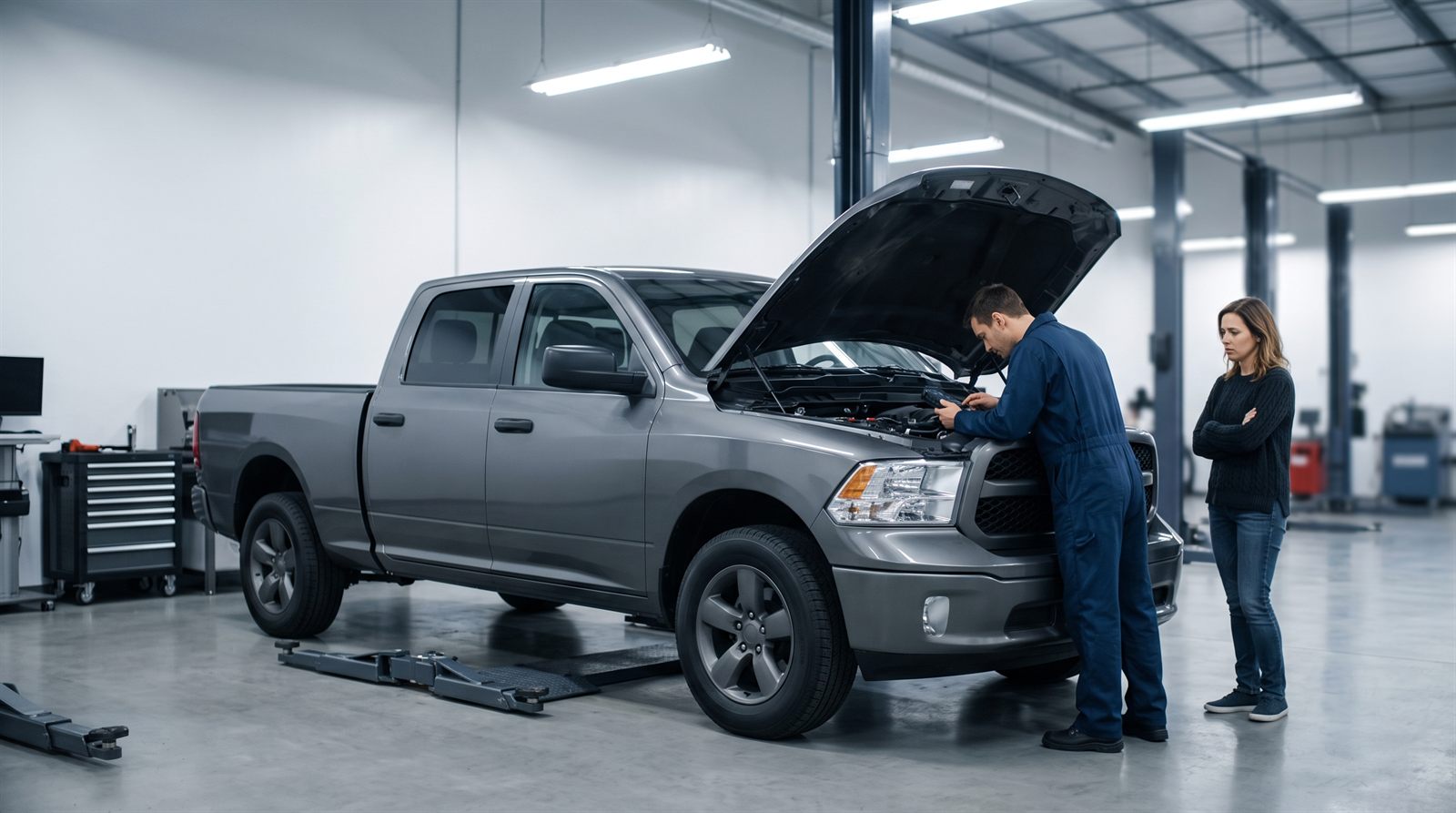
You bought a Silverado, a Sierra, a Tahoe, a Yukon, or an Escalade. A serious, expensive, built-to-last truck or SUV. Then you started hearing a knock, or it lurched and lost power, or it simply died. And when you looked into it, you found out your engine is part of a recall covering roughly 600,000 vehicles, and that GM's fix for many of them is to put in a thicker oil.
If that sounds too small to solve a serious engine problem, you are not the only one who thinks so. Federal regulators have now opened an investigation into whether GM's recall remedy actually works. This guide explains the defect in plain English, what GM is (and is not) offering you, and why, for a lot of California owners, a lemon law claim is worth far more than a heavier grade of oil. For the bigger picture, start with our overview of California lemon law.
The Defect: What's Actually Failing
The engine at the center of this is GM's 6.2L V8, known internally by the code "L87." It is the premium engine in GM's full-size trucks and SUVs. According to GM's own recall filing with federal safety regulators, the problem is in the bottom end of the engine: connecting rod and crankshaft bearing failure caused by manufacturing problems, specifically leftover debris in the oil passages and crankshafts machined outside of spec.
Starved of a clean, consistent film of oil, the bearings wear, overheat, and seize. What starts as a knock or a tick can end with the engine locking up. In the worst cases a connecting rod snaps and punches through the engine block. Because these are heavy vehicles, a seizure at highway speed means a sudden loss of power, along with the power steering and braking assist that go with it. That is why this became a federal safety recall rather than a quiet warranty fix.
- 2021–2024 Chevrolet Silverado 1500, Tahoe, Suburban
- 2021–2024 GMC Sierra 1500, Yukon, Yukon XL
- 2021–2024 Cadillac Escalade & Escalade ESV
- All with the 6.2L V8 (L87) engine. A federal investigation is separately looking at whether 2019–2020 models and some later builds should be added.
Two quick clarifications, because the internet blurs them. The related 5.3L V8 is a different engine with its own separate problems (collapsing lifters), and is not part of this bearing recall. And GM has several unrelated engine cases floating around (diesel fuel pumps, older oil-consumption issues). This article is only about the 6.2L L87 bearing failure.
GM's Fix Might Be Thicker Oil
Here is where a lot of owners do a double take. Under the recall, a dealer connects your truck to GM's diagnostic system and checks for a specific trouble code (P0016) that tends to appear once a bearing is badly damaged.
- If the engine fails that inspection, GM replaces the engine.
- If the engine "passes," the remedy is to drain the factory 0W-20 oil and refill with a thicker 0W-40 oil, add a new oil cap and filter, and slip a note into your owner's manual. That is the fix.
The theory is that thicker oil holds a slightly stronger cushion between the worn parts. But it does not remove the debris or re-machine an out-of-spec crankshaft. GM also added a 10-year / 150,000-mile special coverage warranty for this specific failure, which is better than nothing. Still, step back and look at what is really on offer: for a truck that may have a defective engine from the factory, the front-line remedy is a heavier grade of oil and a promise to fix it later if it breaks.
When the recall remedy for a possibly defective engine is "add thicker oil," you have to ask the obvious question: is that fixing the truck, or just delaying the failure past the point where anyone is still counting?
The Fix Isn't Holding, and Regulators Know It
This is the part that changes everything. In January 2026, the National Highway Traffic Safety Administration opened a formal query into the "adequacy of the remedy" for this recall. In plain terms: the government is investigating whether GM's own fix actually works, after receiving reports of engines that failed anyway after getting the recall service.
And it is not only the oil-treated engines. According to the regulator's filing, owners have reported catastrophic failures following both versions of the remedy, including trucks that received a brand-new replacement engine. That strongly suggests the underlying manufacturing problem was not fully solved. You do not have to take a lawyer's word that the fix may be inadequate. Federal safety regulators are asking the same question right now.
For you, that is the whole ballgame. If the recall remedy does not reliably fix the truck, then "just get the recall done" is not a real answer, and a warranty that promises endless future repairs on a flawed engine is not the same as being made whole.
What GM Offers vs. What California Law Offers
Line the two paths up next to each other and the gap is hard to miss.
What GM offers: a thicker oil or a replacement engine (of uncertain durability, per the federal query), plus a 10-year/150k warranty. All of it keeps you in the truck, making payments on a vehicle with a stigmatized engine and a resale hit.
What California's lemon law offers: a way out. Under the Song-Beverly Consumer Warranty Act (Civil Code section 1793.2), if GM cannot fix a defect that impairs the vehicle's use, value, or safety after a reasonable number of attempts, it has to buy the truck back. A buyback returns your down payment, your monthly payments, and your loan payoff, plus sales tax and registration, minus a mileage offset for the miles before your first repair visit.
Two more provisions give the law real force, and GM's recall has no equivalent to either:
- A civil penalty of up to two times your damages. Under Civil Code section 1794(c), if GM's refusal to repurchase was "willful," a court can add a penalty of up to twice your actual damages.
- GM pays your attorney's fees. Under section 1794(d), a winning consumer recovers attorney's fees and costs from the manufacturer, which is why these cases are handled on contingency and cost you nothing out of pocket.
And remember what kind of vehicle we are talking about. These are $60,000 to $90,000-plus trucks and SUVs, so a buyback plus a potential penalty is a serious number, not a token refund.
Got the recall "fix" and still worried about your engine?
If your 6.2L truck or SUV has been in the shop for the engine, or you just got handed thicker oil and a warranty card, let us look at it. We will tell you straight whether you have a buyback claim. Free, no obligation, no fees unless we win.
Start Your Free Case ReviewThe Class Action Is Not a Buyback
You may have seen news of a large class-action lawsuit over these engines. Dozens of cases were consolidated into a single federal action (Powell v. General Motors) in Michigan, led by well-known consumer firms. It is a serious case, and GM disputes the claims, which remain allegations the court has not yet ruled on.
But understand what a class action like this typically does. It mainly seeks group-wide damages, such as compensation for the diminished value everyone suffers from owning a stigmatized engine. What it does not do is force GM to buy back your specific truck, and it does not deliver California's civil penalty. For an owner whose engine has actually failed, or keeps threatening to, an individual Song-Beverly claim is usually a bigger, faster, and more complete remedy. The two are not mutually exclusive, and which path fits you depends on your facts. That is worth a conversation, not a guess.
One Step You Should Not Skip: The 30-Day Notice
There is a catch specific to GM, and it matters. GM has opted into California's new AB 1755 framework, which changed how these claims start. Before you can sue GM for the civil penalty, you generally have to send a written pre-suit notice and give GM 30 days to respond. The notice needs to include your name, your vehicle's VIN, a summary of the repair history, and a clear demand that GM repurchase or replace the vehicle.
This is not just paperwork. If you file suit without a compliant notice, you can forfeit the two-times civil penalty, which is often the most valuable part of the claim. Handled correctly, the notice also builds your case: if GM ignores it, lowballs you, or misses its deadline, that becomes strong evidence of the "willfulness" that unlocks the penalty. This is exactly the kind of step where doing it yourself can quietly cost you money, and where having a lawyer send it is worth it. We cover the broader rule change in our guide to AB 1755 and SB 26.
What To Do Right Now
Whether you end up using the recall, the class action, an individual claim, or a mix, the steps that protect you are the same, and they come down to documentation and timing.
- Save every repair order with the date, the mileage in and out, and your complaint in your own words (knocking, loss of power, stalling, warning lights)
- Keep your purchase or lease contract and any recall or warranty letters GM sent you
- Get the recall performed and keep the paperwork, including whether you got the oil remedy or an engine replacement, and note if problems continue afterward
- Hold onto receipts for towing, rentals, and out-of-pocket costs
- Treat a stalling or seizing engine as a safety issue first, and do not keep driving a truck that is failing
- Do not send GM a go-it-alone demand letter before understanding the AB 1755 notice rules, and do not sell or trade the vehicle mid-claim without advice
- Act promptly; deadlines under the new rules can be shorter than owners expect
Frequently Asked Questions
Is my GM 6.2L V8 truck covered by California's lemon law?
It can be. If your 2021–2024 Silverado, Sierra, Tahoe, Yukon, Suburban, or Escalade with the 6.2L V8 has repeatedly failed or been in the shop for the engine while under warranty, and GM cannot fix it after a reasonable number of attempts, Song-Beverly can require a buyback, a civil penalty of up to two times your damages for a willful violation, and payment of your attorney's fees. Whether you qualify depends on your specific vehicle and repair history.
What is recall 25V-274 and what is the fix?
It covers about 597,630 model-year 2021–2024 GM trucks and SUVs with the 6.2L V8 (L87). Dealers inspect for a trouble code; engines that pass get a switch to thicker 0W-40 oil plus a new cap, filter, and manual insert, while engines that fail get replaced. GM also added a 10-year/150,000-mile special coverage warranty for the defect.
Is the class action the same as a buyback?
No. The consolidated federal class action mainly seeks group damages such as diminished value, and GM disputes the claims. It does not force GM to repurchase your specific truck and does not award California civil penalties. A buyback plus a 2x penalty and paid attorney's fees comes only through an individual California claim.
Do I have to notify GM before filing?
Generally yes. GM opted into California's AB 1755 framework, which requires a written pre-suit notice (your name, VIN, repair summary, and a demand to repurchase or replace) with 30 days for GM to respond, before you sue for civil penalties. Filing without a compliant notice can forfeit the penalty, so it is worth having an attorney handle it.
How much can I recover?
If your truck qualifies, you recover what you paid into it, your down payment, monthly payments, and loan payoff, plus taxes and fees, minus a mileage offset for miles before the first repair. A willful refusal can add a penalty of up to two times your damages, and GM pays your attorney's fees. On high-value trucks and SUVs, the totals are often substantial.
Talk to a California Lemon Law Attorney
If your GM truck or SUV has an engine you no longer trust, you have more leverage than a recall notice suggests. The defect is documented in GM's own filings, regulators are openly questioning whether the fix works, and California law gives you a remedy the recall does not: getting out of the vehicle entirely, with your money back and a possible penalty on top.
At Power Lemon Law, every case review is free. There is no obligation, and we do not get paid unless we win. Bring your purchase paperwork, your recall letter, and every repair record you have, and we will tell you honestly whether you have an individual claim, should use the recall or class action, or some combination, and we will handle the AB 1755 notice the right way. You can contact us here or call 877-323-LEMON.
Driving a GM truck with an engine you don't trust? Let us tell you what your case is actually worth.
Led by head attorney Bobby Yaghoubian, Power Legal Group is a California consumer protection firm fighting for drivers stuck with defective vehicles. A division of Power Legal Group, PC.