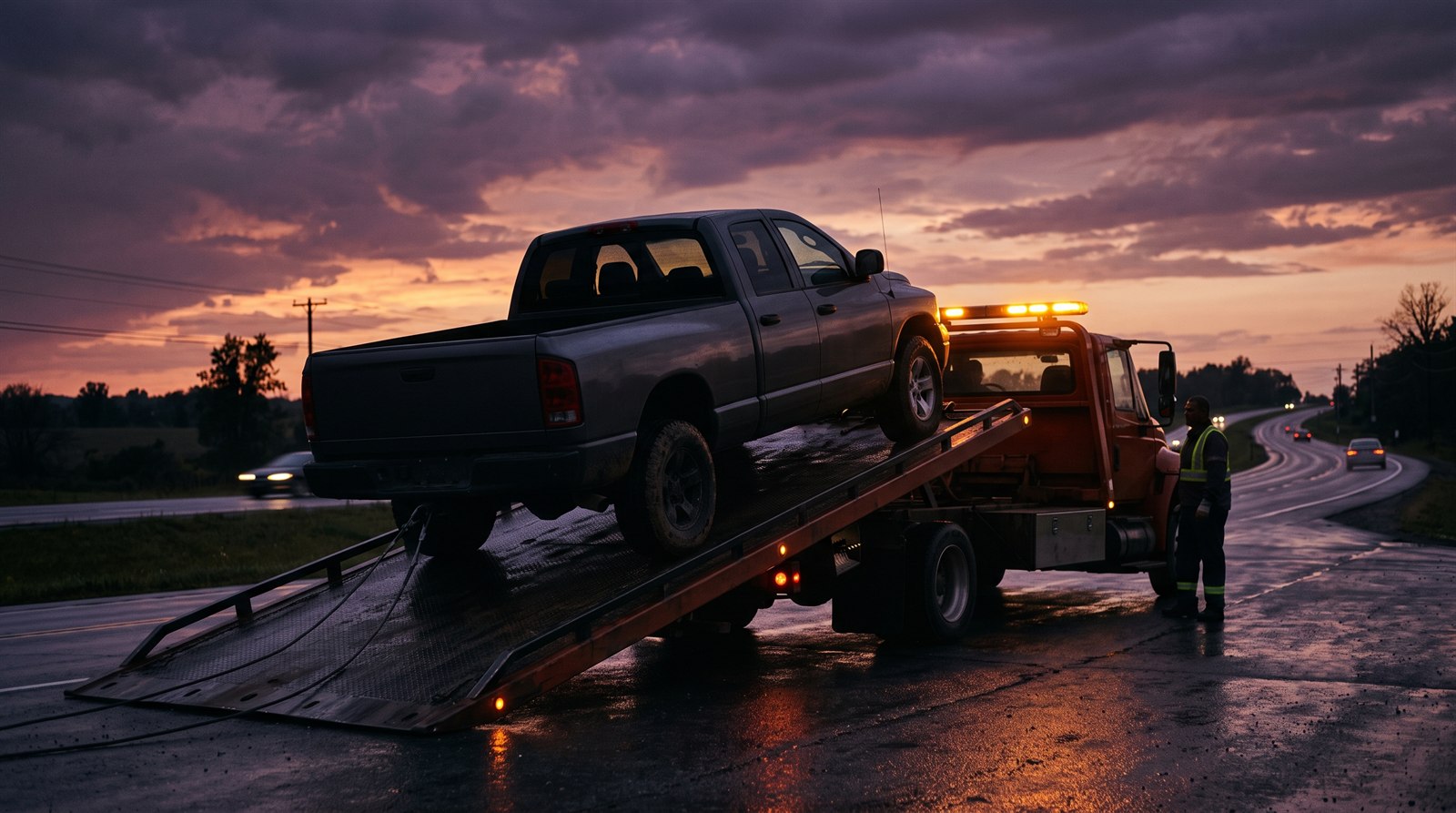
You bought an F-150, a Mustang, an Explorer, an Expedition, or a Lincoln Navigator. Ten forward gears, marketed as smooth and efficient. Instead you got a truck that clunks into gear, hunts for the right ratio, lunges like it was rear-ended, or hesitates for a beat and then lurches when you need to merge. You take it in, they reflash the software, and a few weeks later it is doing the same thing again.
If that is your experience, you are far from alone, and this is not in your head. Ford's own service bulletins trace the problem to hardware inside the transmission, and owners across the country have taken Ford to court over it. This guide explains the defect in plain English, what Ford is (and is not) really offering you, and why, for a lot of California owners, an individual lemon law claim is worth far more than another trip to the service bay. For the bigger picture, start with our overview of California lemon law.
The Defect: What's Actually Failing
The transmission at the center of this is Ford's 10R80, a 10-speed automatic used across much of the Ford and Lincoln lineup since the 2017 model year. According to Ford's own Technical Service Bulletin 24-2254, the key hardware problem sits in a component called the CDF clutch cylinder, which houses several of the transmission's internal clutches.
In transmissions built on or before mid-August 2022, an internal sleeve in that cylinder can slide out of position under the heat and pressure of normal driving. When it moves, it lets hydraulic pressure leak past where it is supposed to seal. Because an automatic transmission relies on precise, instant fluid pressure to lock its clutches and change gears, that leak means a gear engages a fraction too late, so the transmission's computer commands more pressure to compensate, and the clutch then slams home. That is the violent lunge or clunk owners describe. Left alone, the same pressure loss lets clutches slip and overheat, shedding debris into the fluid and accelerating the wear. Ford eventually redesigned the cylinder with a permanent lip to hold the sleeve in place, a running change on later builds, which is as close to an admission that the original part was flawed as you tend to get.
A second source of harsh shifts is the main control valve body and its solenoids, which route fluid to the right clutches. Sticking valves and faulty solenoid hardware produce the classic two-to-three-second delay going from Park to Drive or Reverse, followed by a hard clunk when the gear finally catches.
- Ford F-150 (2017–present)
- Ford Mustang, Expedition (2018–present)
- Ford Ranger (2019–present)
- Ford Explorer, Transit, Police Interceptor Utility (2020–present)
- Lincoln Navigator (2018–present) and Aviator (2020–present)
From the driver's seat, the same underlying problems show up as a familiar set of complaints: harsh, jerky shifting; the transmission "hunting" between gears or skipping them; hesitation and a delayed response when you accelerate; a shudder or shimmy during shifts; and, most alarming, a momentary loss of power or a slip into false neutral, which is genuinely dangerous when you are trying to merge or pass.
First, a Point of Confusion: This Isn't the 1.4-Million-Truck Recall
If you have been searching, you have probably seen headlines about Ford recalling roughly 1.4 million F-150 trucks for "unexpected downshifts." It is easy to assume that is this problem. It is not, and the distinction matters for your claim.
That large recall (NHTSA campaign 26V237) covers 2015–2017 F-150s built with the older 6R80 six-speed transmission, and its root cause is an electrical problem in the transmission's lead frame and range sensor, fixed with a software update. That is a different transmission from the 10R80 ten-speed this article is about. News coverage constantly blurs the two because the 2017 F-150 was sold with both. If your truck is a 10-speed with harsh shifting and CDF-related repairs, the 6R80 recall is not your issue, and the fact that Ford has not issued a comparable nationwide recall for the factory 10R80 defect is exactly why individual owners have had to turn to the courts and to the lemon law.
Software Flashes, Teardowns, and the 2025 Recall
Ford's response to the 10R80 has come through a chain of service bulletins rather than a broad safety recall. Early bulletins treated harsh shifting as a software problem and told dealers to reflash the transmission computer and have it "relearn" your driving. Owners were often warned the truck might keep shifting roughly for a hundred miles while it adapted. When that did not hold, later bulletins escalated to overhauling the valve body, and finally, in TSB 24-2254, to removing the transmission entirely and replacing the CDF cylinder with the redesigned part, a labor-intensive teardown that can run several thousand dollars once you are outside the powertrain warranty.
There is also a genuine 2025 recall involving the 10R80, but it is narrower than owners hope. In October 2025, Ford recalled about 34,481 remanufactured 10R80 transmissions (NHTSA campaign 25E070) that were sold as replacement units for 2017–2021 vehicles. At a third-party remanufacturer, an assembler had been leaving out a specific bearing (the "T10"), which can misalign the parking mechanism and let the vehicle roll away even in Park. The fix is to inspect and, if needed, replace the transmission.
Read the fine print, though: that recall targets a missing bearing in some replacement transmissions, not the factory CDF clutch cylinder defect that most owners are actually complaining about. In other words, the harsh-shifting problem in your original, factory-installed transmission is still not the subject of a nationwide safety recall. It is handled truck by truck, at the dealer's discretion, under bulletins most owners never see.
What Ford Offers vs. What California Law Offers
Line the two paths up next to each other and the gap is hard to miss.
What Ford offers: a software reflash, a valve-body overhaul, or, in the worst cases, a transmission teardown and rebuild, each of which keeps you in the same truck and hopes the next repair is the one that finally sticks. If you are out of warranty, some of that can land on your bill.
What California's lemon law offers: a way out. Under the Song-Beverly Consumer Warranty Act (Civil Code section 1793.2), if Ford cannot fix a defect that impairs the vehicle's use, value, or safety after a reasonable number of attempts, it has to buy the vehicle back. A buyback returns your down payment, your monthly payments, and your loan payoff, plus sales tax and registration, minus a mileage offset for the miles you drove before your first repair visit.
Two more provisions give the law real force, and Ford's repair process has no equivalent to either:
- A civil penalty of up to two times your damages. Under Civil Code section 1794(c), if Ford's refusal to repurchase was "willful," a court can add a penalty of up to twice your actual damages.
- Ford pays your attorney's fees. Under section 1794(d), a winning consumer recovers attorney's fees and costs from the manufacturer, which is why these cases are handled on contingency and cost you nothing out of pocket.
On the vehicles that use this transmission, that is not a token number. A loaded F-150, Expedition, or Navigator is a $60,000 to $90,000-plus vehicle, so a buyback plus a potential penalty adds up quickly.
Back at the dealer again for the transmission?
If your Ford or Lincoln 10-speed keeps shifting harshly, lunging, or losing power, and the reflashes are not holding, let us look at it. We will tell you straight whether you have a buyback claim. Free, no obligation, no fees unless we win.
Start Your Free Case ReviewThe Class Actions Are Not a Buyback
You may have seen news of class-action lawsuits over the 10R80. There are two main ones. O'Connor v. Ford, in federal court in Illinois, covers 2017–2020 F-150s; the court has already thrown out the fraud claims (calling Ford's "smooth shifting" marketing mere puffery) but let the warranty claims proceed. A second, consolidated case, McCabe v. Ford in Massachusetts, gathers together suits covering the broader lineup, the Mustang, Ranger, Explorer, Expedition, and Navigator, on behalf of owners in several states, including a California class. Both are serious cases. Ford disputes the allegations, which the courts have not yet resolved.
But understand what class actions like these typically do. They mainly seek group-wide damages, such as compensation for the diminished value everyone suffers from owning a vehicle with a known defect. What they do not do is force Ford to buy back your specific truck, and they do not deliver California's civil penalty. They also move slowly, often taking years to reach any payout. For an owner whose transmission keeps failing right now, an individual Song-Beverly claim is usually a bigger, faster, and more complete remedy. The two are not mutually exclusive, and which path fits you depends on your facts. That is worth a conversation, not a guess.
One Step You Should Not Skip: The 30-Day Notice
There is a catch specific to Ford, and it matters. Ford has opted into California's new AB 1755 framework, which changed how these claims start. Before you can sue Ford for the civil penalty, you generally have to send a written pre-suit notice and give Ford 30 days to respond. The notice needs to include your name, your vehicle's VIN, a summary of the repair history, and a clear demand that Ford repurchase or replace the vehicle.
This is not just paperwork. If you file suit without a compliant notice, you can forfeit the two-times civil penalty, which is often the most valuable part of the claim. Handled correctly, the notice also builds your case: if Ford ignores it, lowballs you, or misses its deadline, that becomes strong evidence of the "willfulness" that unlocks the penalty. This is exactly the kind of step where doing it yourself can quietly cost you money, and where having a lawyer send it is worth it. We cover the broader rule change in our guide to AB 1755 and SB 26.
What To Do Right Now
Whether you end up using a repair, the class action, an individual claim, or a mix, the steps that protect you are the same, and they come down to documentation and timing.
- Save every repair order with the date, the mileage in and out, and your complaint in your own words (harsh shifting, lunging, hesitation, loss of power, warning lights)
- Ask the dealer to write down the shifting complaint each visit, even when the "fix" is only a software reflash, so the attempt is on the record
- Keep your purchase or lease contract and any warranty or bulletin paperwork the dealer gives you
- Note whether the same problem came back after each repair, and how soon
- Treat a slip into neutral or a sudden power loss as a safety issue first, and do not keep driving a truck you no longer trust
- Do not send Ford a go-it-alone demand letter before understanding the AB 1755 notice rules, and do not sell or trade the vehicle mid-claim without advice
- Act promptly; deadlines under the new rules can be shorter than owners expect
Frequently Asked Questions
Is my Ford or Lincoln with the 10-speed covered by California's lemon law?
It can be. If your F-150, Mustang, Explorer, Expedition, Ranger, or Lincoln Navigator or Aviator with the 10R80 has repeatedly gone back to the dealer for shifting problems while under warranty, and Ford cannot fix it after a reasonable number of attempts, Song-Beverly can require a buyback, a civil penalty of up to two times your damages for a willful violation, and payment of your attorney's fees. Whether you qualify depends on your specific vehicle and repair history.
What is actually failing in the 10R80 transmission?
In Ford's own bulletin (24-2254), the core hardware problem is the CDF clutch cylinder. In units built on or before mid-August 2022, an internal sleeve can move and leak hydraulic pressure, so gears engage late and then slam home, producing the harsh shifting, lunging, hesitation, and power loss owners report. The main control valve body and its solenoids are a second source of harsh shifts. Software reflashes often do not fix it because they do not repair the hardware.
Is the class action the same as a buyback?
No. The 10R80 class actions mainly seek group damages such as diminished value, and Ford disputes the claims. They do not force Ford to repurchase your specific vehicle, do not award California civil penalties, and can take years. A buyback plus a 2x penalty and paid attorney's fees comes only through an individual California claim.
Do I have to notify Ford before filing?
Generally yes. Ford opted into California's AB 1755 framework, which requires a written pre-suit notice (your name, VIN, repair summary, and a demand to repurchase or replace) with 30 days for Ford to respond, before you sue for civil penalties. Filing without a compliant notice can forfeit the penalty, so it is worth having an attorney handle it.
How much can I recover?
If your vehicle qualifies, you recover what you paid into it, your down payment, monthly payments, and loan payoff, plus taxes and fees, minus a mileage offset for miles before the first repair. A willful refusal can add a penalty of up to two times your damages, and Ford pays your attorney's fees. On trucks and SUVs like the F-150, Expedition, and Navigator, the totals are often substantial.
Talk to a California Lemon Law Attorney
If your Ford or Lincoln has a 10-speed you no longer trust, you have more leverage than a service ticket suggests. The defect is documented in Ford's own bulletins, owners are already in court over it, and California law gives you a remedy the dealer does not: getting out of the vehicle entirely, with your money back and a possible penalty on top.
At Power Lemon Law, every case review is free. There is no obligation, and we do not get paid unless we win. Bring your purchase paperwork and every repair record you have, and we will tell you honestly whether you have an individual claim, should use a repair or the class action, or some combination, and we will handle the AB 1755 notice the right way. You can contact us here or call 877-323-LEMON.
Driving a Ford with a transmission you don't trust? Let us tell you what your case is actually worth.
Led by head attorney Bobby Yaghoubian, Power Legal Group is a California consumer protection firm fighting for drivers stuck with defective vehicles. A division of Power Legal Group, PC.